One day I decided to bring me home Tanganyika, (1 ª part) 
all know that an image worth a thousand words and that I base this small article about the image that reflects our tanks and we want that they emit.
all know that decorating an aquarium based on one of the various biotopes of Lake Tanganiyka is not an easy task because there are not many components we have for them, that is, looking good these biotopes we realize that the main materials for this work, unlike other biotopes from different parts of the world will basically consist of stone and sand and a very, very sparse vegetation which in my opinion and always keep in my aquarium floor.
Always and considered by recreating the Tanganiyka aquaria are the most difficult to achieve simply because of the difficulty of achieving attractive aquariums and especially sight and important point that are comfortable and appropriate for our species. Combining these two factors appears a difficult task at first glance but nothing is further from reality to imagination and everything is to spend time recreating the small space you want to assign to our cycles.
is important to me that the species that keep you comfortable in my tanks and the main thing is to know that species can be kept at home depends on their habitat
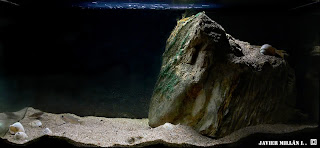
strictly so that the ideal is to try to recreate as faithfully as possible the ecosystem.
To begin we need to know which species or species are going to prepare the aquarium and imagine their place in their habitat, whether in a bed of shells, in the rocky strict, or simply a buffer zone in the sand. Today
much information about it and know where the majority of species and their habits and many photographs necesidades.Disponemos underwater lake so it is easy to make a mental sketch of how we want the approach of our decor.
depends on the size of the aquarium but this is not an impediment for good landscapes that are attractive and make life easier for our fish. We will see later
decorations in different litrajes show that with a little patience and imagination can make an aquarium a real delight for the viewer to admire them.
comes the day we decided to set up an aquarium dedicated to the habitat and begin to collect materials for ello.Como for any recreation of tanganiyka start by choosing a beach adequate from my point of view shall be a neutral to slightly darker color and a fine particle size for lamprologuinos who like to dig to find this task easy, thanks to a fine sand.
One option that I favor is to mix different types of sands of different grain sizes and colors so that is certainly much more natural.
Mahale Lake Tanganyika beach, photo by Juan Molina 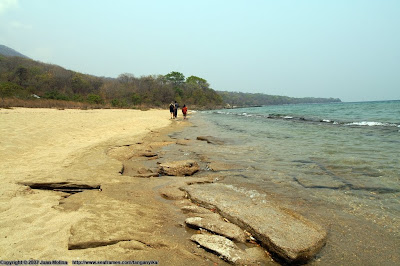
The photo shows a beach on the coast of Mahale, a fine-grained sand and brown. The following material
would rock though this project will play an papel secundario pudiendo ser descartadas si fuera necesario y si decidiéramos dedicar por completa la base de nuestro acuario a un autentico manto de conchas.
La estructuración y composición con rocas como e dicho antes no juega un papel importante por lo tanto yo me decantaría por situar una buena roca en un extremo o en el centro del acuario si quisiéramos incluirla en nuestro proyecto y que serviría como separación de territorios para las especies si de un acuario grande estuviéramos hablando.

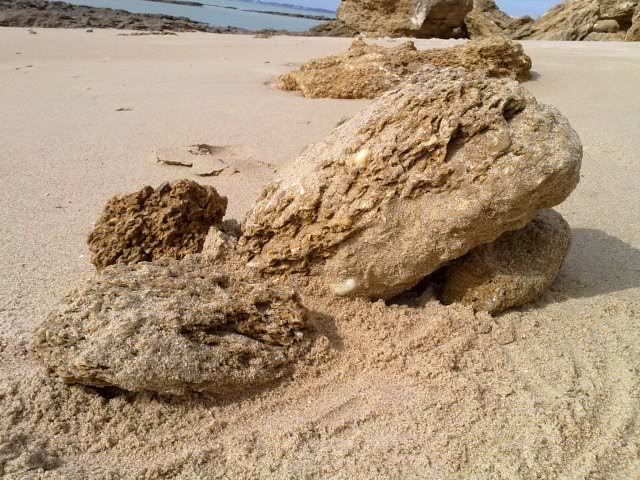
Hay muchos tipos de roca y sin duda no sera en una tienda donde daremos con ellas.La mejor opción es recolectarlas directamente del campo, rió o la playa, where we find what we're looking for with ease and where we can choose between the different textures and colors that nature offers us. Especially
say before you touch this subject that when the choice of decorative material such as rocks or sand, if we are to catch the sea or the mountains have to be very conscious not to harm or hurt that area small trees ... etc by a simple rock, surely if we find around what we want without damaging nature, especially this point we have to take into account as we are not going to cost money, at least we respect the area without damaging the least ... as if we had not gone there.
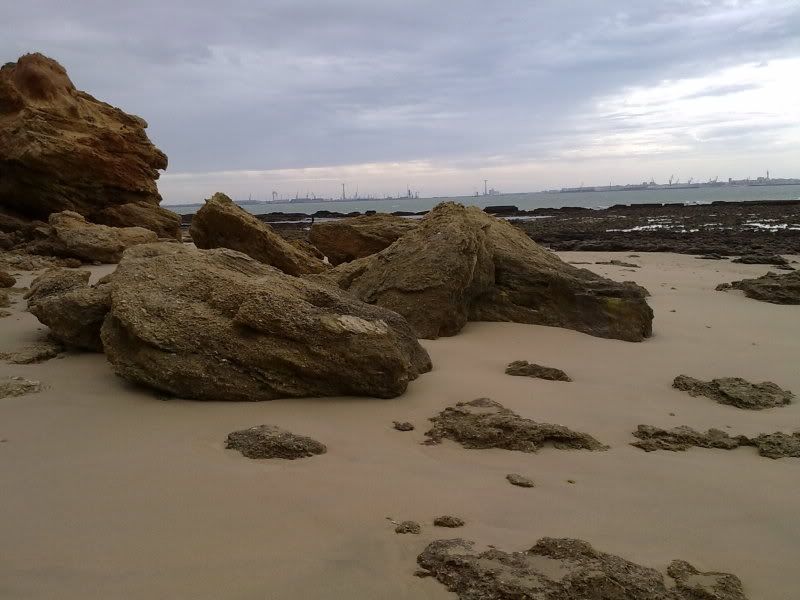
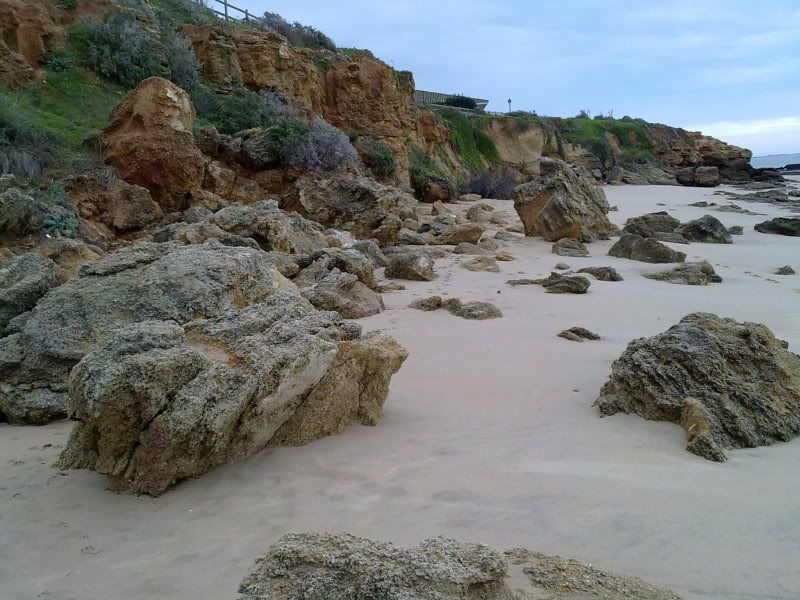
Now we give a small tour of the English coast beaches, namely a small cove off the coast of Cadiz.


In the same area to do the "collection" of sand and small rocks can do placement tests with the rocks, like sand will be the same a slight idea of \u200b\u200bhow we stay in the aquarium, thus avoiding rocks take longer. Also since we have chosen this day to "collect" the best material is that before we "get to work" with sand and rocks it is best that we gave a small tour of the area around that area, in Spain we are very fortunate to have a long coastline which many have strong resemblance to the lake as you have seen on the beach photo Mahale, by that I mean that giving a single turn can see landscape made by the very nature can inspire us much time to decorate your aquarium, so I enjoy that day and its environment and above all respect it.
Leaving for the last place perhaps most important of the materials have shells undoubtedly Neothauma Tanganiyka Lake native and the most appropriate for this project and to play the most important role when it comes to being faithful to the biotope 're going to recreate.


------------------------------------- --------------------------------------------
1 .- shell bed
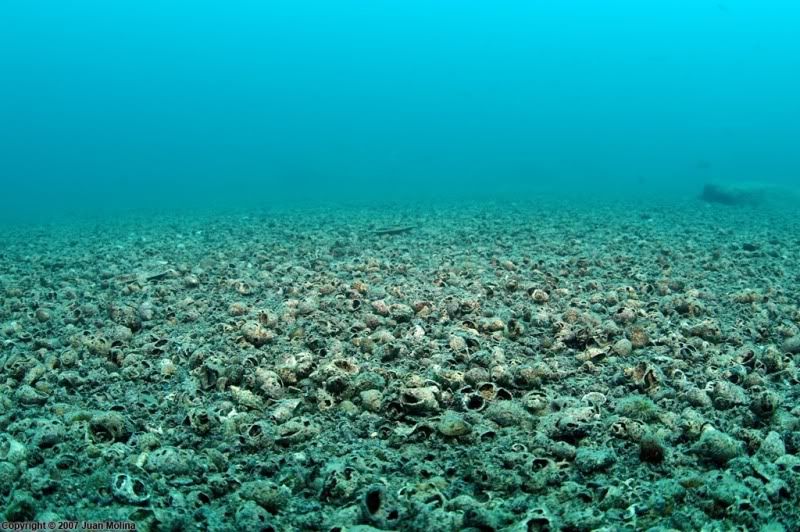
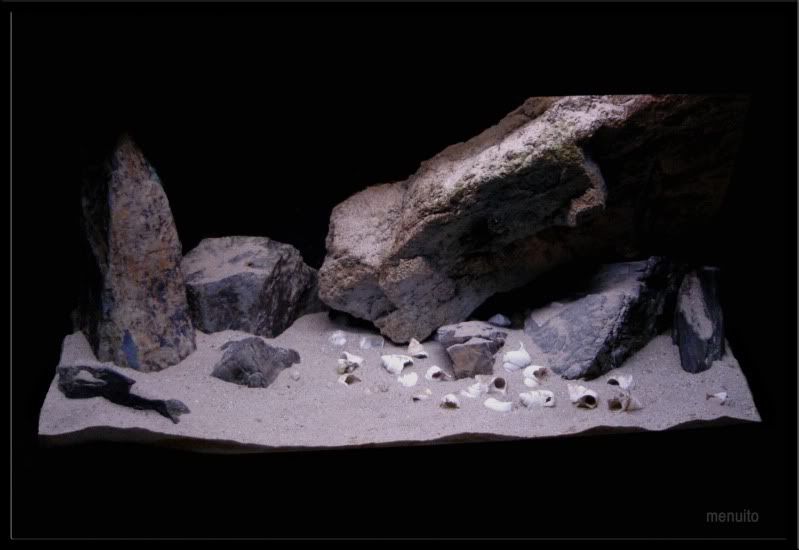
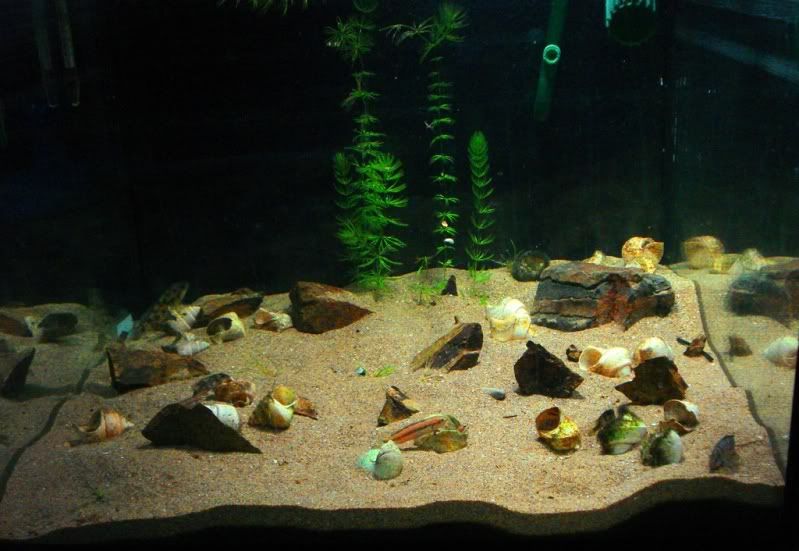
This biotope seems simple to play but I find it one of the most complex and tend to be more faithful to their reality and the decoration that he composed it will be a shell base and low Neothauma my point of view I find it most suitable for aquariums rather large and with good basis for this effect look really Prairie shell. The basis of our aquarium stay completely covered in them reaching the base full uncovered for Sandy, another option is to have a large number of them distributed throughout the tank but leaving chunks of bare sand without becoming so burdensome as perhaps the last option.
Here's an example of the same lake.

biotope
This could include many species as it really is a habitat that can encompass a myriad of strict shell-dwelling or not, occasional shell-dwelling fry / juvenile endless species using a time the field of shells for shelter, but few are strictly related to this type of habitat and therefore dedicate this aquarium decoration will we limit somewhat the number of species if we are in the peaceful aquarium.
One of the best species identified with the bed of shells and really taken advantage of this habitat is the
Neolamprologus multifasciatus and his fellow
Neolamprologus similis.

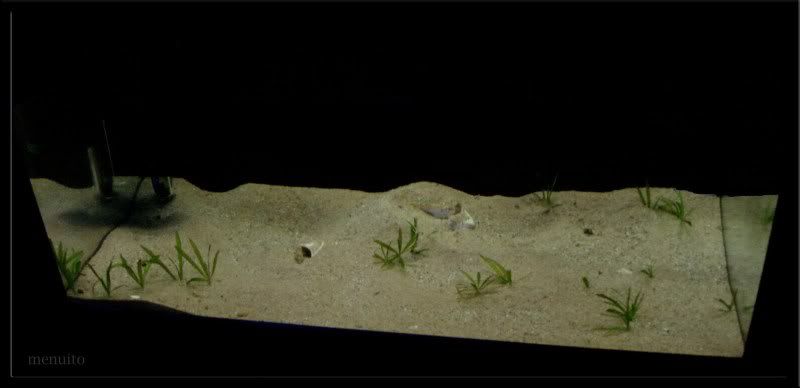
The construction of this biotope is based on sand and shells to give a more natural is better to put a good amount of sand and shells in terms we can use various types of shells, even in this case I prefer the Neothauma to give a "more Tanganikero air" to the aquarium, then we see a great example, a 100l aquarium where live a colony of Neolamprologus similis, we see that by having a lot of sand, drops and hondiduras are created as in nature giving a greater sense of naturalness.

2 .- Zone sandy and rocky middle.
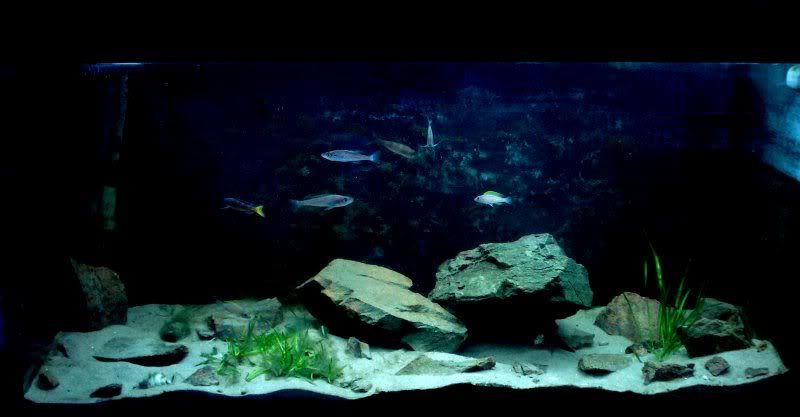
At this point we will cover this three habitats, the reason is very simple, not unless we had a couple formed by N.ocellatus example, it would be difficult to put a small group of 4 or 5 copies in an aquarium 100l which only decoration was the sand and the respective shells, so in this case, the rocks will help us determine territories of refuge for beleaguered copies and as decoration.
then we will be able to see 4 60L to 126L aquariums recreating various habitats


aquariums are two examples of community 300L and 240L


As you could see they are faithful portraits of habitats in the lake to our fish and their well-being is paramount, if we see our fish behave as if the lake was, first of all we have to give a similar environment.
In this first part we played the decoration for aquarium conchciolas in the next edition we will do other habitat habitat .... let's call!
Thanks to Javier Millan, Juan Arjona and John Molina for his photographs
article by: Alex and Alex Zaragoza Escamez
Pictures. Juan Arjona, Javier Millan and Alex Zaragoza
Enjoying- Tanganyika
www.tanganyika-cichlids.foroactivo.net